Sunday, April 17, 2011

Indescribable Mumbai

The Trident Bandra Kurla Lobby
Arriving in Mumbai from Johannesburg, we were blessed to find that our hotel, the Trident in Bandra Kurla, was a beautiful, cool, quiet and (unbelievably) very affordable place, with impeccable service. And, thank heavens our hotel was the peaceful respite it was, as we allowed little time for rest among interviews in Mumbai.


Pooja's Team with Pooja on the Left in the Middle
Beginning with our first interview with Pooja Warier, Director and co-founder (with Richard Alderson of the UK) of UnLtd India (www.unltdindia.org), a seed fund and incubator for social entrepreneurs, we were pretty much on the run every day. Pooja was a delightful start to our visit, making us feel welcome the moment we arrived at the Bombay Hub, where the organization provides co-space and services to its members. The organization's distinction is working with early-stage social entrepreneurs, offering them a "complete ecosystem of seed funding, incubation support and co-working space with which to launch their ventures."

During our visit to the Hub, we met Karen Peters (who is actually from Wisconsin, continuing to live in Mumbai with her Mom after her Dad's working time in the city), who with Adrienne Thadani founded a nonprofit called 'Fresh and Local' at the Hub. The organization aims to "design, plant and maintain fruit and vegetable gardens in the urban setting of Mumbai to address problems of lack of access to organic, nutritious, fresh and locally grown food." Their intention is to work with local people to create fifteen hundred gardens of a size that would benefit thirty people each.We also had the opportunity to spend a delightful evening with Pooja at Juhu Beach during our stay in Mumbai, discovering many intersections and connections in our lives. Our children will not be surprised to know that Pooja is our most recent "adoptee."

As the days went by, we began to more deeply understand the need for social entrepreneurship and an agressive civil and social sector in Mumbai (some say that the Indian government lacks the "will" to intervene in the seemingly insurmountable social problems). The city is gigantic - more than 19 million people by some estimates - and the great majority live below the poverty level of less than $1.00/day income. Mumbai is a magnet to Indians from rural areas seeking a better life, but many who arrive dreaming of Bollywood end up in prostitution or organised crime. The city's population has doubled in 25 years, with half living in slums. In some parts, 50,000 people are said to be crammed into each square kilometre.

This scale of poverty is nearly impossible to imagine, but impossible to ignore on most any street, where families live beneath tarps on the sidewalk, and young girls with babies knock on our taxi windows asking for money at intersection after intersection. More about our visit to Dharavi (locale of 'Slumdog Millionaire' filming) later in the blog.

Creative Handicrafts New Building
(http://www.creativehandicrafts.com/)
Helping us greatly to begin to understand how NGO's are playing a role in alieviating poverty was our visit with Mr. Johny Joseph at Creative Handicrafts. Creative Handicrafts was founded 25 years ago by Spanish Missionary, Isabel Martin, in response to research findings that women in the Mumbai slums, whose husbands were abusive, alcoholics or absent, were unable to care for themselves or their children without any means of earning a livelihood. The organization set out to train women in sewing and handicrafts that could be sold for a profit. Eventually, services were added to include primary education, health assistance, savings and micro-credit, and adult education.

Today, Creative Handicrafts coordinates the production of 12 textile cooperatives spread in different slums, each one producing garments, complements, soft toys, and other handicrafts that are aimed at both local and international markets. The international market is managed through the NGOs involved in fair trade projects, the local one through exhibitions, sales at schools, universities, institutions, stalls and their own store. Johny notes how important it has been to the organization over the past several years to design and create products that sell based on their global level quality, rather than on their charitable development "story." In addition, a food catering and delivery project, Asli Foods, was born as an employment alternative to those women that, for several reasons, cannot get involved in sewing activities.

Women in Training at Creative Handicrafts

Although the organization's headquarters has moved in recent months into a large building donated by the Spanish government, Johny was kind enough to take us to their prior offices and workshops in a nearby slum. We were able to interact with kids at the creche, the women of 2 cooperatives, and women preparing food for the catering business. We learned a great deal from our interview, especially about the ways out of poverty by helping women in the slums and rural areas to become productive and able to educate their children.

The most striking thing about Mumbai, of course, is the extraordinarily stark contrast between the slums and the fast-paced, cosmopolitan, urban economic powerhouse that Mumbai is determined to become.  We were most fortunate to be able to glimpse the private industry and government sides of the equation, due to the generous introductions made for us by Professor Prasad Kaipa, an Indian professor and executive coach to many Mumbai leaders, who our friend Mark Nepo suggested that we contact. The result was three fascinating interviews including Mr. Ravi Kant, Vice Chairman of Tata Motors; Mr. Prakash Apte, President/Managing Director of Syngenta India, Ltd.; and Rear Admiral (Retd.) Chary, Director (Shipbuilding) of Mazagon Dock Limited.


Nano - the People's Car
We traveled to Bombay House, the headquarters of Tata Motors (http://www.tatamotors.com/), passed through very tight security, and were led to the outer offices of Mr. Ravi Kant, the company's very highly respected Vice Chairman. Founded by Ratan Tata, one of India's most successful businessmen with multiple enterprises around the country, Tata Motors is perhaps best known for having recently purchased Jaguar and Land Rover from Ford Motor Company, and its introduction in 2010 of the world's first $2500 car, the Nano, known as "the people's car."


It would be hard to imagine a more wise, warm, gentle, generous and forthcoming an industrial leader than Ravi Kant. Having scheduled a 15 minute appointment, we were able to spend nearly an hour learning about his decade long tenure at the helm of the company, during which time its remarkable growth and transformation has occurred. At the end of our visit, he asked us to wait outside the office for a few minutes, disappeared for a bit, and then invited us back into his office, presenting us with a bag full of goodies - company literature, a recently published book about the Nano's painful and exhilerating introduction into the marketplace, and a lovely wristwatch for each of us (made by Titan Industries, a Tata company).


We're looking forward to opportunities that may arise to share the results of Dave's sabbatical research with Mr. Kant, as he is becoming deeply involved in his "retirement" role as Chairperson of the Board of Governors for the new Indian Institute for Management/Rohtak, a graduate school intended to "produce world-class managers and leaders through its philosophy of exposing students to real life unstructured situations apart from imbibing them with knowledge of the analytical tools and business philosophies required to be a success in the current, and foreseeable, economic scenario."


If Ravi Kant was pure charm, Prakash Apte, President/Managing Director of Syngenta India, Ltd. was pure delight. With a self-deprecating style, an infectious laugh, and an amazing story of leading his company's transformation, our interview with Prakash was surely a highlight of our Mumbai experience. We were so fortunate that he agreed to our interview, and then drove 2 hours from the city of Pune to Mumbai (on his day off!) to meet with us as our hotel.


It is hard to overestimate the importance of a company like Syngenta (http://www.syngenta.com/) to India's survival. The company's purpose, "bringing plant life to potential," indicates its commitment to helping farmers increase their production, while preserving the environment, and ensuring healthy food supplies for all. In other words, their work as a huge agribusiness is sustainable agriculture through two main types of products: seeds and crop protection.


We will look forward to sharing the story of Syngenta's recent change initiative, which was based on a marriage of two things: wise business strategy and the Indian spiritual concept of sankalpa; san meaning "altogether," and kalpa meaning "idea." While having much deeper meaning than can be stated here, the idea of sankalpa in this context means taking an individual and collective oath of intention or will toward a specific outcome. While strategy is rational, sankalpa is pure intuition.


The final Mumbai interview, with Rear Admiral (Retd.) Chary, Director (Shipbuilding) of Mazagon Dock Limited (MDL), was a fascinating look into the supplier/builder of warships, stealth frigates and submarines for the Indian Navy and others. Mazadon also builds offshore platforms and associated support vessels for offshore oil drilling. It also builds tankers, cargo bulk carriers and passenger ships and ferries. The shipyards of MDL were established in the 18th century. Ownership of the yards passed through various entities, including the British India Steam Navigation Company. Eventually, Mazagon Dock Limited was registered as a public compan in 1934. The shipyard was nationalized in 1960, and is now a function of the Government of India.

Admiral Chary (also having taken time away from a national holiday to visit with us at our hotel) shared with us his perspective on the differences between his lifelong career as a Naval officer, and the challenges of managing the enormous complexities of a huge government organization, employing thousands of unskilled (but now cross-trained) employees doing extremely difficult and demanding physical work, along with highly skilled workers doing very technical and precise work.

Ghandi's Bedroom
By the end of these interviews we were a tired pair, and knowing that we would be unlikely to visit Mumbai again, we went looking for a brief "tourist" experience. Little did we know how much territory we could cover with our wonderful driver from the Trident. Beginning with a visit to Ghandi's home, we ventured onto a brief shopping expedition, and then on to the primary sites of Mumbai's November 2008 terrorist attack. During the attack, witnessed worldwide on television, 120 people, some from the US, Australia and Europe, but primarily ordinary Indians, were killed and many hundreds wounded. One of the first targets was the historic Leopold's Cafe, a favorite hang-out of foreigners, where we had lunch during our tour. Then we went on to the famous Taj Mahal Palace hotel, where hundreds of people were held hostage and many died (the other hotel attacked was the other Trident hotel at Naimon Point).
Leopold's Cafe
Finally, and completely impossible to describe, was a brief visit to the gigantic Dharavi slum (the site of the filming of the movie, 'Slumdog Millionaire'). We had actually passed up a longer Dharavi visit and interview with the founders of Reality Tours, due to pure exhaustion, but we did get a bit of a walk-through down one street with our driver. Our immediate and surprising impression (besides the oppressive heat) was an alive hub of entrepreneurial activity taking place in the most unlikely and harsh environment imaginable. In every shop we saw, there was an enterprise at work recycling scrap - from large, household applicances to all sorts of other metals and plastics. Untold numbers of people just trying to eke out their survival from the rest of the city's discarded trash. And a few goats.


Saturday, April 9, 2011

The Gift of South Africa

It is difficult to even know what to share about our time here in South Africa, except that it is an extraordinary gift to be able to learn just a bit more about this precious land, its history, its pain, its glory, its people and their desire for a better future.

CAPE TOWN

View from the yard of our Lodge

The astonishing beauty of Cape Town's rugged coastline and mile upon mile of beautiful beaches is most impossible to describe.

Our digs at Fullham Lodge
Our stay at Fullham Lodge, the seafood at Camps Bay, and the caretaking of Isaac, our ever-ready-to-help driver, made us feel about as spoiled and fortunate as privileged white Americans can get. Even spending many hours at the Water Front (think San Francisco wharf on steroids) solving multiple technology problems was (almost) pure delight.


A little Sunday afternoon wine tasting
 A visit to Groot Constantia winery was a lesson in the Cape's history, as well as a picture of family pleasures on a Sunday afternoon, and the lush beauty of the wine lands.

While experiencing the wonders of Cape Town, it is astonishingly easy to forget that over a million of its residents live in a mammoth squatters camp just behind the city's airport. And it was stunning to us to learn, as we were leaving in our taxi for the airport at 4:30 am, that many homeless people were living in the bush just outside the door of the guesthouse where we had been so pampered and cared for. These are among many more millions of men, women and children all over South Africa who have yet to realize Nelson Mandela's dream

Carole and Isaac at the Tutu Center
Our first interview here, with Nomfundo Walaza, CEO at the Desmond Tutu Peace Centre (founded in 1998 to build on and leverage the legacy of Archbishop Tutu to foster peace in the world), was worth the entire trip to South Africa. Nomfundo is a clinical psychologist who has worked in the human rights field for the last two decades, where she has focused on empowering and healing victims of torture, trauma, and violence, many of whom suffered severely at the hands of the apartheid government. She served as a commissioner in the Truth and Reconciliation Commission, where she was instrumental in ensuring that the voices of women were raised, and as the Executive Director of the Trauma Centre for survivors of violence and torture. It will be a great privilege for us to share a bit of the story of this most wise, passionate, resolute, stately and generous woman with others.

Our interview with Maryse Barak and dinner with she and her husband, Steve, was an opportunity to hear about Maryse's consultancy, focusing on creating "thinking environments," as well as an opportunity to share an evening with a Cape Town couple who are living the story of South Africa's emergent democracy first hand. Maryse is also part of a group of women who own and operate a retreat center and sustainable farm near Cape Town.

Our new Chaeli Campaign friends
Our final interview in Cape Town was with the founders of the Chaeli Campaign, a non-profit organization whose mission is the inclusion and empowerment of differently abled people. The organization's story begins with two pairs of sisters, determined to raise the money to purchase an electric wheel chair for Chaeli (who has cerebral palsy), then only nine years old. The girls, ages six to twelve, astonished their mothers by raising the funds in a matter of weeks, primarily by selling their own artwork. The rest, as they say, is history, an incredibly worthy one at that. The Campaign now supports numerous fundraising, rehabilitative, cultural, artistic, and sports programs.


JOHANNESBURG

Our stay at The Melville House in Joburg was everything promised in its reviews, the highlights of which were the joys of engaging with owner, Heidi Holland, and other guests over an early evening glass of wine. Heidi, born in Zimbabwe (then Rhodesia), long-time resident of Joburg, newspaper columnist and author of numerous books, including a History of the ANC, African Magic, and Dinner with Mugabe, is hostess to a range of most fascinating writers, diplomats, development workers and others who pass through for a night or a while. A fascinating interview with Heidi, revealed the insightful views of a sensitive, caring and courageous observer of sub-Saharan Africa's social, economic and political scene.

Chene Swart, who generously drove from Pretoria for our interview, and Colleen Magner, partner in REOS, a global consulting firm, provided fascinating insights into what it means to work with managers and leaders in a culture still deep in the throes of transition from the systemic abuses of apartheid to the promises of democracy.  Much of Chene's work in recent years has been with an enormous platinum mining company, whose  exploitation of people and place is an essential part of South Africa's history. Chene has built a professional practice based on the discipline of "narrative therapy," which she uses with cross-sections of all employees of the mine to surface the old "problem stories" and evoke stories of possibility for the future.

Colleen and her team, focusing largely on the work of Adam Kahane, author of Power and Love: Solving Tough Social and Organizational Problems, work across difference in many forms, including race, class, culture and institutional boundaries. When asked to tell a story of possibility for the future of South Africa, Colleen spoke of the recent hosting of the World Cup. What she observed was a joyful, proud, lived experience by thousands upon thousands of South Africans who may have, for the first time since the end of apartheid, actually experienced what a future beyond the pain and suffering could bring.

Our final interview here in South Africa was one of the most moving experiences of our lives. Mabule Mokhine of the GreenHouse Project in Joubert Park here in Joburg, is a young man whose wisdom opened our eyes to how little we know and how much we have to learn from those who have lived the South African experience. Born in Soweto during the years of apartheid, he embodies the spirit of ubuntu or a connection with the wholeness of everything that is, and serves to both demonstrate and invite others into a life of sustainability, sufficiency, and care for one another and the earth's blessings. It will only be the sharing of his own words, not ours, that can express who Mabule is and what he brings to life.


David and our guide, Lasuto in the Court
 Yesterday, we visited Constitution Hill, the home of the country's Constitutional Court, built on the site of the unimaginably cruel prisons of the apartheid era. It is difficult to get one's mind around the fact that it was only in 1991 that apartheid laws making it illegal for any black person to enter Johannesburg without the infamous passbook through which they could prove employment were abolished. Impossible to understand are the conditions in which these and perpetrators of other "crimes" under the regime were held for days, weeks, months or years. Among those who served time in the site's prisons were Nelson Mandela and Mahatma Gandhi, along with countless others who were fighting for freedom or simply trying to stay alive.

Cell for up to 60 "non-white" men

The Court, built in 2003-04 in part with the bricks from the "Waiting for Trial" prison, stands as a symbol of what an era of justice in South Africa can mean. Its theme and logo, depicting people gathered beneath a tree symbolizes a justice system where people come together in a spirit of equality to resolve the injustices of the past, the present and the future.

Entrance to the Men's Prison

Today, we visited the Apartheid Museum where we spent four hours and could have spent many, many more. Having learned a lot, we came away with the sense that no one will ever really know how it is possible that humans can knowingly inflict such degrading pain, humiliation, brutality and suffering on others.

Tomorrow we may visit the Origins Centre, and then must prepare to move on to Mumbai. We remain astonished, joyful and humbled by this opportunity to see the world and to be in the company of so many people modeling ways of thinking and being that hold the potential for transforming our workplaces, communities and societies.

Humanity was born in Africa
All people ultimately are African


Monday, March 28, 2011

Around the World in 80 Days!


Honest, it really is 80 days - we counted! It all began in Costa Rica, and now we're off to Cape Town, Johannesburg, Mumbai and Phnom Penh. Then home for a month or so (to rest up), and off to Munich, Frankfurt, Belgrade, Budapest, London, Paris, Oslo and Copenhagen. Actually, if we include the North American "road trip" to follow this summer, it's more than 80 days, but who's counting?

Before we begin reporting from Cape Town, we really need to thank so many people whose advice we have sought in setting up Dave's sabbatical interviews. A HUGE thank you to Mark Nepo, Prasad Kaipa, Angeles Arrien, Louise van Rhyn, Deborah Frieze, Bob Stilger, Meg Wheatley, Susan Dupre, Robert Deahl, Mary Kohler, Judith Mayotte, Peter Norlin, Graeme Storer, John Kesler and more that we'll mention as we go along.

The result is interviews with the Executive Director of the Desmond Tutu Peace Center, the Vice Chairman of Tata Motors in Mumbai, and so many others that we'll be writing about here and elsewhere over the coming months.

Then there is the thank you to Laura Espinoza at AirTrek for setting up a complicated, but exciting, itinerary, and to Lucy Camacho for making sure we got our visas on time!

Then, of course, the biggest thank you of all goes to our most beloved family and friends that put up with our nonsense and never ever tell us that we're completely nuts!


Sunday, March 20, 2011

UnderPromise OverDeliver

Who would have thought that one of my early learnings would come not from traditional research or the interviews, but from the sabbatical process, itself. and that the learning would take me back nearly 30 years.

“UnderPromise OverDeliver”  is a phrase taught to me many years ago by my friend and colleague, PQ System’s own Dr. Michael Cleary as we were beginning to teach the manufacturing folks in Jackson, Michigan about Dr. W. Edwards Deming. "UnderPromise OverDeliver" may have always been true. It may always be true. It is certainly true today.

I am in the middle of this sabbatical that requires me to buy and learn to use new high definition video and arrange interviews, transportation, and lodging all over the world. Although the sabbatical is a lot of fun, it is really intense as I have a limited amount of time to get the interviews done, reviewed, and documented into products that make some sense.

Once I decided to videotape the interviews, Terry Terry, a friend whose media savvy I deeply respect convinced me to record the interviews in high definition instead of on my little Handycam. Because I was entering into unknown territory and had a relatively short time to get and learn to use the equipment, I looked for the most reliable (by word of mouth) supplier I could find. I was careful to check, document, and double check all our agreements. Timing was tight, but everything was coming along until, less than two weeks before I was to leave, the supplier contacted me and said he could not get me all the equipment I needed. I have not taken the time to figure out what happened, but this company had given me a promise that they failed to meet. I scrambled around and got what I needed…barely in time for the trip.

At the same time, I started to work with a travel agency that is used by several colleges and universities in the area to plan our relatively complex, around the world trip. Because I was aware of the complexity of the trip, I asked what experience they had with this type of trip. They’d done it before…no problem. As we spent time trying to work out the details of the trip, I noticed that the agency seemed to be getting less and less responsive. The day that the tickets needed to be booked, I called to find out the agent I was working with was gone and no one else had any way to help. Again, we scrambled to find another way which meant starting our trip two weeks late and cutting it short. This is another example of a company not meeting its promise or, at least, its customer’s expectations.

I hope I will attempt to figure out what happened with both these situations, but for now I’m still scrambling to make my sabbatical a reality. I’m also remembering Dr. Deming frequently saying that managers are trying to put themselves out of business. That sure is true in the case of these two companies.  My Customer Service textbook (Paul R. Tim, Customer Service, Prentice Hall, Saddle River, NJ: 2011) recently reminded of the statistics we all know:
·       It costs 5-6 times as much to get a new customer as it does to keep one
·       Word of mouth has the predominant role in the spread of products and services
·       Studies have shown that, on average 50-100 people will be told about bad service

It doesn’t take a brain surgeon to figure that a firm is better off meeting or, better yet, exceeding its customers’ expectations than falling short of them. And it doesn’t take a brain surgeon to know that the firm usually sets the customers’ expectations. Underpromising and overdelivering makes sense. How do we accomplish it?

The first thing that comes to mind is training. So often, our front line folks are not given adequate training. We have all had the benefit of on the job training. The boss or peer says this is what you should do. You then start and learn how to do the job by asking questions when you do it wrong…to the chagrin of the customer. Good on the job training is possible. Some organizations even do it. As part of my recent personal journey, however, I was reminded that you can do more. With my new travel agency, AirTreks, the agent who worked with me frequently provided special assistance and advice, because she had already made the trips I was asking about. Start with good training and then go beyond.

Most front line folks want to help the customer. Make it easy. I am reminded of a trip we made to a Ritz-Carlton Hotel years ago. Everyone on staff was allowed to spend $50 to make a customer happy. That was when $50 was a lot of money. Also, don’t make it difficult.

Avoid the use of conditions, goals, and objectives that that cause front line employees to short change customer service. We have heard of or been part of service systems that encourage front line folks to maximize the number of customer served without regard to the quality of the service provided. I remember that when I was at Ford before Quality is Job One, our field service reps were encouraged to spend as little money as possible to satisfy a customer complaint. That, of course, resulted in long negotiations that did nothing to enhance the customers’ view of Ford Motor Company.

UnderPromising and OverDelivering, of course, takes more effort than that, but just good training and encouragement in all our customer-supplier relations can go a long way toward high quality and keeping our companies in business. It seems to me that UnderPromising and OverDelivering are essential qualities of good management.

Tuesday, February 22, 2011

Adventure on the Home Front

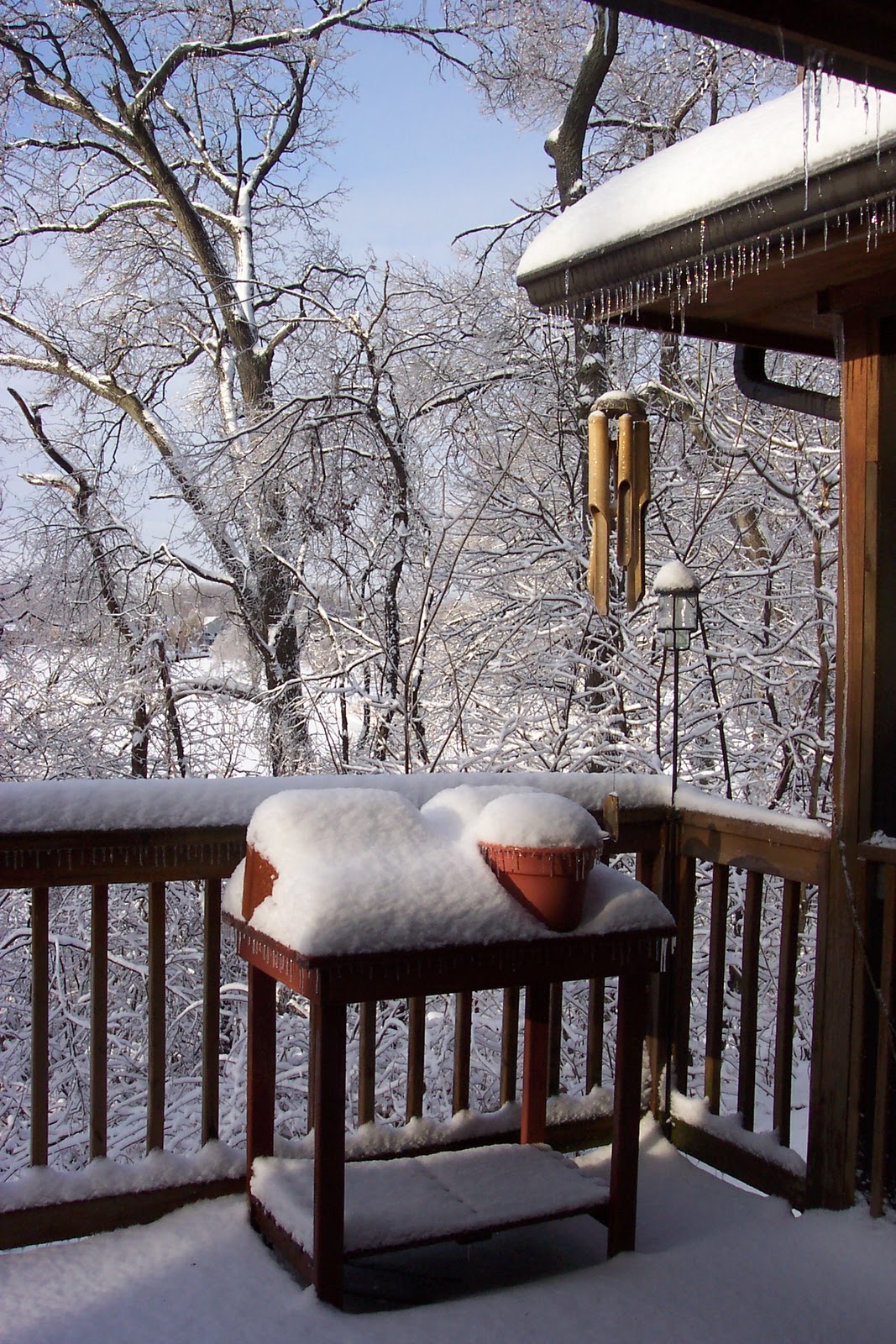
Who says staying home can't be an adventure? Forewarned by predictions of snow and ice, we weren't surprised to wake up at 4 a.m. on Monday morning to a loss of power. We WERE surprised, to say the least, a few minutes later, when we heard some loud cracks and then a HUGE crack followed by an even huger "THUD!" right outside our window. Upon investigation, we found that half of a giant oak had fallen under the weight of the ice, landing across our front yard, and taking a very small bit of the roof/eave with it. Boy, we were lucky! It seems like it could just as well have fallen into the house, although we do a pretty good inspection job every year to see that there aren't dead branches destined for such a fate.

When we learned later Monday morning that we wouldn't have power until Tuesday night, we spent a few minutes bemoaning the fact that our fabulous generator, installed in preparation for Y2K, hadn't been running for a number of years. Then we did the wise thing and called for a hotel room in town! Not to worry, we figured, we would call and get someone to come out and fix our generator. After a great try of several hours in the cold and snow, the technician declared that the machine was a goner! Later in the day, after calling every possible store in the area, we realized that there was nary a non-electric heater in sight that might help us keep pipes from freezing. So, we went back home to keep the fireplace going overnight.

We've always said that we could make a party out of most any situation, and we proved it to ourselves once again last night! We picked up a pizza, stoked the fire, snuggled up under every quilt in the house on mattresses in front of the fire, and watched a movie on Dave's new Mac. Somewhere in the middle of the movie we got a call from the generator folks, saying that they could install a new one at 8:30 in the morning! We set the alarm to feed the fire once every hour or so and made it through the night!

The technicians arrived right on time, installed the new generator and fired it up! It ran for all of 5 minutes, when our power came back on! So, now we have power from our electric coop, back up from the generator, and glorious, glorious sunshine. The whole place looks like a fairy tale today, with the sun on the trees and the lake. We are truly blessed today and always.

However, we are also feeling so very deeply saddened today by the news from Christchurch in New Zealand. If you haven't been following the news, an earthquake right in the middle of this beautiful and historic city has taken the lives of at least 65 people, and dozens are still missing in the rubble. New Zealand is the next stop on our sabbatical tour, as well as a magical place where we have spent many wonderful months, and the home of many dear friends. It is simply unimaginable to think about experiencing such a tragedy and it happens so often to so many people around the world.

We're still planning on New Zealand, followed by Australia and South Africa, and then (we think) on to Cambodia (where we have an old friend and brilliant development practitioner/consultant), and then India. We are blessed every day by the connections friends and family and colleagues are helping us make as we explore Dave's interests in "management and leadership practices around the world with the potential for transforming our workplaces, communities and societies." Ideas about who we should visit and interview? Send them along, PLEASE!

One final note: a great big "thank you" to Dave and Bailey for assembling my Costa Rica "peace chair" that now sits happily in our living room!

Saturday, February 5, 2011

The Sun Sets on Costa Rica

The sun has now set on our Costa Rica adventure, but we've gathered enough memories for a lifetime (as well as miles of sabbatical interviews, as Dave will share later). Here are just a few memories of our last few days in Pure Vida land.


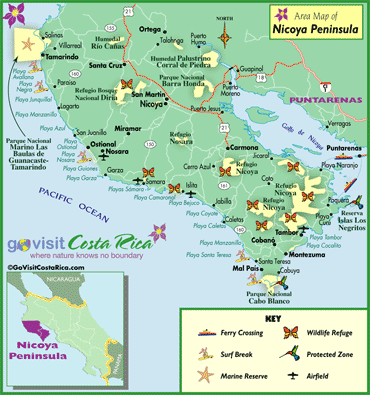
Nicoya Peninsula
On the next to the last day at Tango Mar, we couldn't resist the temptation to rent a car and venture out to some of the Nicoya Peninsula's most beautiful beaches, even though we were told that the roads were a bit of a challenge (Kristi, Randy and Lisa - think a narrowed Hawkins Highway with no maintenance for several years and potholes the size of a Volkswagen Beetle)! It was indeed quite the adventure, we saw beautiful beaches, but we came back saying that Tango Mar and Tambor Bay had been a most lucky choice for a fabulous vacation.
Once we heard the Michigan weather forecast, we decided that another couple of days in the sunshine couldn't hurt anything. Thus, we headed back to Margarita's B & B near the airport for one prepaid night, and then landed ourselves back in our favorite place in Santa Ana, the lovely Villas Los Candiles. It truly felt like a homecoming, and we were able to have one more meal at each of two wonderful, world-class restaurants in the neighborhood, Doris Metropolitan and Bacchus!

Dave at Nature Air
As a bit of a long shot, Dave emailed a contact at Nature Air (http://www.natureair.com/, the world's first carbon neutral airline), hoping to get one last interview before returning home. A meeting was quickly arranged by the most accommodating Gabriela for the following afternoon. We headed out to the Tobías Bolaños Airport, made our way through some very tight security, and proceeded to Hangar 7 for the interview. We were completely shocked and thrilled to find out that we had a 30 minute interview with Alex Khajavi, the founder and CEO, and another 30 minutes with the COO, Roberto Kopper. The story of the airline, Alex's history and mission, and Roberto's management philosophy is one that needs to be told all over the world (more about that when Dave blogs about his interview experience).

Audi Store at the MultiPlaza
On our final afternoon, I convinced Dave that we shouldn't leave Costa Rica without visiting the MultiPlaza in Escazú, the neighboring town to Santa Ana. It turns out that Escazú is pretty much an expatriate enclave, where several embassies, including the US, reside. The mall was an absolute shocker, given what we had seen of Costa Rica in almost 3 weeks. It has more than 300 stores, all incredibly upscale, ranging from (I kid you not, an AUDI store on the 3rd floor) Carolina Herrera to Salvatore Ferragamo to Tiffany. And, totally in Costa Rica style, when we weren't sure how to explain to a taxi driver where we wanted to go next, a young employee of a shop near the mall entrance came out of the store, walked us to the entrance, hailed us a taxi, and explained where to take us! The people in this country are just astounding!

Typical Bars and Barbed Wire
Besides the amazing people, Costa Rica is full of wonder and contrasts. It was surprising to us to see that most people live behind bars and barbed wire in a country that is the safest in Central America, barely impacted by the region's drug trade, fairly free of poverty, and with a crime rate far below the US. Many shops have guards at the door, and we even went to a restaurant where patrons can't enter the premises without the guard unlocking the door.


Green McDonald's in Lindor Santa Ana
 Another fun discovery is that Lindora Santa Ana, near our hotel, is the home of the first "green" McDonalds's restaurant in Central America. They say that, "Sustainable design and construction elements will save 40 percent in drinking water consumption and 30 percent in energy use. Recycled materials were used in the restaurant’s lobby and dining areas and rain water is collected and re-used for irrigation purposes. In addition, restaurant crew members are trained to communicate with customers about the green features of the restaurant to build awareness of McDonald’s efforts and commitment on the environment." Note the flora growing on the roof in the picture!

On our last evening, we asked Adrian at Villas Los Candiles to arrange for a very early morning taxi to get to the airport for home. We had come to absolutely adore Adrian for his smile, spirit, and his impeccably helpful attitude. We had learned that he is also a budding entrepreneur with his own little tour company (http://www.findetours.com/), consisting of Adrian and his brightly painted old VW van. Just imagine our surprise when we went to the lobby to get our taxi at 6 a.m. the next morning - there was Adrian waiting for us with his van, wearing his ty-dyed shirt, grinning, and saying, "This is my gift to you. I will take you to the airport!" So incredibly sweet! Makes me get teary just to think about it.


The Always Charming and Generous Adrian
So now we are safe and sound, back home in the snow (Dave has been shoveling for hours!), appreciating every aspect of our life, and greatly looking forward to seeing our family and friends! We'll try not to be completely boring with details of our trip!

Friday, January 28, 2011

Into the Blue Zone - Pure Vida!

View from Our Room
Ahhh, vacation time! Precisely at 9 am (a little unusual for Costa Rica) on January 27, our air-conditioned (ahhh) van arrived at our hotel to take us to the Tango Mar Hotel. The first leg of the journey took us about 1 1/2 hours to Puntarenas, where we boarded a ferry boat for the hour-long trip across the bay to the Nicoya Peninsula. Then another van picked us up for the 45 minute trip to Tango Mar!  It was just a little nerve-wracking driving up the very rutted narrow gravel road, following the faded signs for "Tango Mar Bar and Restaurant," wondering what the heck we had gotten ourselves into! Well, in fact, we have landed in Pure Vida (pure life, i.e., Costa Rican heaven). We were greeted here with ice cold face towels and a fruity rum cocktail at the front desk, and then escorted to our room by the Belgian owner of the property, the amazing Hilda! This is, in fact, the most beautiful place we have ever stayed!

View from the Breakfast Table
Tango Mar is on the Nicoya Peninsula, named by National Geographic researcher and journalist, Dan Buettner, and a team of the world’s top experts in longevity as one of the five "blue zones" in the world (others are Italy's Island of Sardinia; Japan's Island of Okinawa; California's Loma Linda; and, the Greek Island of Icaria has). These are areas of the world where people live healthy lives well past 100 years of age. Buettner (who was on Oprah on January 26!), in his book, The Blue Zones, describes four main steps to help create a blue zone:


1. Move naturally: your home should go along with the natural way you move. Concentrate on things you like to do, such as gardening, walking, swimming or spending time with family and friends.
2. Express your ideas with a positive attitude and allow time for rest.
3. Eat wisely: forget those diet trends that force you to consume 20% less than normal. Do not consume processed foods and have a few glasses of red wine daily. Please remember: do not over indulge.
4. Be part of the right tribe: put those you love first and try and reconnect with your religion or connect to one you wish to explore.

Interesting how close these ideas are to the Five Ways to Well-Being identified by Nic Marks' (of the Happy Planet Index) and colleagues in a research project undertaken for the UK Government Office of Science as part of their Foresight Project. The brief was to create a set of evidence based positive actions individuals could undertake which would improve their well-being. 
  
1. Connect - Invest your time in your loved ones, in your friends, family and acquaintances. Meet people. Talk to them. Understand how they improve your life, and also how you improve theirs. Knowing that you mean something to someone can be one of the most powerful positive forces in the world.
2. Be active - When exercising, the level of serotonin in your body rises and you get a powerful feeling of wellbeing. Something as simple as kicking a ball or throwing a Frisbee around a garden with a friend can knock both this and the previous point off in one go. If you're feeling down, go for a brisk walk and get some air. You'll soon feel better.
3. Take notice - Keeping an eye on what's going on around you keeps your brain running smoothly. If you see an application for planning permission pinned to a lamp-post, and even the tiniest part of your brain wants to know what it says, then go and read it. On a train or bus, rather than burying your nose in a book or your mobile phone, look out of the window and see what's happening outside.
4. Keep learning - Humanity's relentless curiosity is behind almost every single one of our species' accomplishments. Once you've finished your formal education, that's no reason not to stop learning. Actively seek out different viewpoints, and if you don't understand them then find someone knowledgeable to explain them to you.
5. Give - Finally, be generous. A survey gave £100 to two groups of people, instructing one group to spend it on themselves, and another to spend it on other people. Afterwards, the latter group's spirits were significantly higher. If you don't have cash, give your time, your attention or your expertise instead.

Bottom line - don't worry - be happy - Pure Vida!

Dave will blog soon about the amazing sabbatical interviews we have conducted here in Costa Rica. Next up (we hope) will be with Nature Air, the world's first and only carbon neutral airline (http://www.natureair.com/). We're thinking we may take one of their twin-engine planes back to San Jose on February 1.