Saturday, March 17, 2012

The Transformative Workplace

"If you want to awaken all of humanity, then awaken all of yourself, if you want to eliminate
the suffering in the world, then eliminate all that is dark and negative in yourself.
Truly, the greatest gift you have to give is that of your own self-transformation.”
Lao Tzu

The premise of our work-in-progress book, The Transformative Workplace: Growing People, Purpose, Prosperity and Peace, is that the places we work must become the places where we not only contribute to accomplishing the aims and purposes of the organization, but places where we can develop our own potential as highly functioning, fully conscious people who can contribute to making a better world for all. Currently, such workplaces appear to be few and far between, but they do exist around the world, in all sectors and most societies. We were most fortunate to visit many of them during David’s sabbatical which took us to 13 countries on 5 continents.
These organizations, and the leaders and managers we interviewed, serve as examples and inspiration for how the workplace can be the context in which we can meet our basic needs, increase our competence, challenge our assumptions, attend to our well-being, connect our passion to our productivity, make and fulfill commitments to ourselves and others, express our creativity, collaborate across difference, embrace great work, work collaboratively with others, become happier and more peaceful, and give back to our communities and societies.
A further premise is that we become more highly functioning and more fully conscious human beings by progressing through stages of development throughout our adult lives.  These stages have been named, defined and described differently by different scholars and researchers, from Lawrence Kohlberg and Carol Gilligan’s work in moral development; to Robert Kegan’s orders of mind; Robert Torbert and Suzanne Cook-Greuter’s work focusing on levels of leadership development; to the integral theory of Ken Wilbur; and, to the quite familiar self-actualization approach based on needs satisfaction studied by Abraham Maslow, among many others. 

All theories and approaches have their advocates and their critics, and each speaks to a different way of viewing the study of adult development over time. One simple framework that we set forth in the book comes from Richard Barrett, an internationally recognized consultant on leadership, values and culture in business and society, and the author of a number of books including The New Leadership Paradigm (2011). Barrett has developed a model of “Seven Levels of Consciousness” that draws on Maslow’s  Hierarchy of Needs and the views of  Vedic Science. The seven levels provide a way of thinking about how we, as adults, continue to develop over time. His levels include:

Level 1:  Survival; Feeling secure and safe in the world.
Level 2:  Relationship; Feeling a sense of love and belonging.
Level 3:  Self-esteem; Feeling a sense of personal self-worth.
Level 4:  Transformation; The level of self-activation or becoming the author of our own lives
Level 5:  Internal Cohesion; Blending together of the ego and the soul
Level 6:  Making a Difference; Activating your soul’s purpose
Level 7:  Service; Making a difference becomes a way of life

As we progress through and among the levels of consciousness, according to Barrett, “we feel an increasing sense of connectedness to the world that shows up as an expanded sense of identity. We feel a sense of oneness with ourselves, with our family, with our community, with the organization we work for, with our nation, with humanity and the planet, and eventually with the whole of creation.”

Yet another premise of the book is that we move through (and in and out of) these stages of adult development through a process of “transformative learning.” As described by Patricia Cranton, Professor of Adult Education at the University of New Brunswick in Fredericton, Canada, transformative learning “is elegantly simple. Through some event, which could be as traumatic as losing a job or as ordinary as an unexpected question, an individual becomes aware of holding a limiting or distorted view. If the individual critically examines this view, opens herself to alternatives, and consequently changes the way she sees things, she has transformed some part of how she makes meaning out of the world.”

Transformative workplaces, then, are organizations (or communities or societies) that help us progress through the stages of adult development by providing us with transformative learning experiences in our daily worklives. To name just a few of these organizations whose stories will be told in The Transformative Workplace, we begin with Creative Handicrafts in Mumbai, India, an organization that helps women from the city’s slums meet their basic needs for food, shelter, safety and security by producing high quality products that are sold in international markets. Also in Mumbai, we tell the story of Tata Motors, an emerging global automotive giant and part of the Tata Group, known the world over as an organization that gives back and makes a difference. Still another story is about Nomfundo Walaza, Chief Executive Officer of the Desmond Tutu Peace Centre in Cape Town, South Africa, whose life and the organization she leads are the very essence of what it means to embrace compassion for all living things.

We hope that these stories and many more will inspire our readers as much as those we interviewed in our travels inspired us to want to share their wisdom and insights. Watch this space for the stories to unfold.

Blessings to all, Dave and Carole


Sunday, February 5, 2012

The Transformative Workplace

We are thrilled to let our family and friends know that we are writing a book titled, The Transformative Workplace: Growing People, Purpose, Prosperity and Peace.

The question we address in this book is how the places we work, in addition to being places where we accomplish the goals and purposes of the organization, can also be the places where we do our own work of becoming more and more of who we are meant to be as human beings. We address that question by explaining what we mean by transformative work, by highlighting examples of where it is occurring around the world, by making suggestions about how people can find transformative work in their own lives, and by offering ideas about how workplaces can benefit from equally valuing and focusing on the purposes of their work, the purposes of the people who work there, and the purposes of their communities and the larger society.
Our interest in this topic stems from David’s sabbatical leave from his position as a professor of management at Lansing Community College in Lansing, Michigan. The sabbatical took us to thirteen countries on five continents, where we interviewed thirty-six managers and leaders, and visited some of those places and landmarks around the world that serve to inspire both reflection and positive action. David’s purpose in requesting a leave was “to search for a higher level, more conscious practice of management and leadership.” What we found was not only more conscious managers and leaders, but places and spaces where the people they touch are able to connect their inner lives of spirit with their outer lives of action in the world. The term we decided to use for these places and spaces is “the transformative workplace.”
Given that the great majority of people around the world spend most of their waking hours engaged in some sort of work, it was David’s premise that the places we work and the people who manage and lead us have a significant role to play in influencing a shift in how we address the challenges we face in these times.  Surely, he thought, there must be leaders and managers around the world whose practices, if emulated, have the potential for transforming organizations, communities and societies. If he could find those leaders and managers and tell their stories, he might be able to inspire his students and others to shift the way they lead and manage in their own workplaces. He might be able to encourage his students and others to find their own work, rather than trying to find a job. He might be able to shine a light on spaces and places that offer a different model for getting work done in a way that honors both people and the planet. It was important to him that these stories be found around the world and across disciplines, such that people could both identify with them and resist the temptation to dismiss them as being possible only in some cultures and some sectors.
We were aware as we prepared for our search that it is somewhat rare to come upon people who say that they love their work, that they are led and inspired by caring and intelligent managers and leaders, and that they would willingly recruit others to work in the same place. In fact, more and more people are suffering at work, feeling more and more stressed and oppressed, finding less and less time to spend with their families and friends, and having practically no time at all to focus on their own happiness and well-being. Many seem to have lost sight of any desires or aspirations they have for their lives, while many are unable to find any work at all, satisfying or otherwise. It is also for them that we write this book.
We write this book, too, for other managers and leaders whose role it is to help make their organizations prosperous and successful. If the very definition of management and leadership is the ability to get work done through others, then who would not want employees who are continually learning, improving themselves, and increasing their capacity for being able to thrive in an ever more demanding and complex work environment? Who would not want to create a workplace where, as we discuss in this book, people can meet their basic needs, increase their competence, challenge their assumptions, attend to their well-being, connect their passion to their productivity, make and fulfill commitments, express their creativity, collaborate across difference, embrace great work, work peacefully with others, become happier and give back to others?
As David stated in the application for his sabbatical, we both believe that, as a human species, we are poised at the “edge of chaos” or a significant turning point, one that could constitute a breakdown of human and environmental systems, or break through to ways of living that value all living beings and the planet we call home. Further, as David has stated, what happens will largely be determined by the choices we make and the actions we take in the coming years. We happen to be among those who choose to believe that a breakthrough is possible, and that there are already significant strides being taken by many people all over the world that are evidence that a future that works for all is possible.

We will be using this blog to share some of the wisdom of those we interviewed in our travels through the occasional chapter synopses, wisdom and quotes from our interviewees, and inspiritational video clips that we just can't keep to ourselves. Along the way, we would love to hear your thoughts about this topic, stories you'd like to share, and ideas for how we can make what we're sharing here more widely available.

Tuesday, August 16, 2011

Help Us Celebrate Our 25th Anniversary

Who knew when we all sang "Let there be peace on earth and let it begin with me" at our wedding on August 16, 1986 that today we would be reflecting on our 25th Anniversary World Tour and writing about our experiences at the University for Peace in Costa Rica! Surely we had no idea whatsoever what would happen over these many years, but the ride has been pure joy!

To those who shared our most happy day those many years ago, we thank you for being there, and continuing to be in our lives today! To those who weren't able to be there (or weren't born yet!), we wish that you all would have even just one day in your lives that happy and joyous!

To our 6 precious children, their 6 amazing life partners, and our 6 fabulous grandchildren, we would simply say this. When we married, we vowed to each other that we would create a home full of love, first for our family. We are eternally grateful that you all help make that dream come true every single day of our lives.

Here's how you can help us celebrate our 25th anniversary (be patient, it's kind of a long story). Yesterday as we were writing up our experiences at the University for Peace (UPeace) in San Jose, Costa Rica, we wandered around on the website that honors the legacy of Robert Muller (http://robertmuller.org/rm/R1/Home.html). Muller served at the United Nations for 40 years, most of those as Assistant Secretary General. When incredibly serendipitous circumstances moved the UN to establish the University for Peace, Muller was selected to found and develop the institution. Long an admirer of Muller, Dave's intention was to make an interview with him the very first of his sabbatical. Unfortunately, as we were planning our trip to Costa Rica for January 2011, we learned that Muller passed away in September 2010. Off we went to UPeace, anyway, and had a perfectly remarkable experience.

Bench of Dreams at UPeace
Yesterday we learned something more about UPeace that we missed while we were there and this is how you can help us celebrate today! At the base of Mt. Rasur where UPeace is located and where Robert Muller lived in his "refirement," as he called it, there is a "Bench of Dreams." Visitors to the Bench are asked to place a pebble or stone in each hand, press the two hands together, and, with eyes closed, to dream. When opening their eyes, one stone is thrown onto the Earth, so that the sacred Earth will remember the dream, and the other stone is taken home as a reminder of the dream. Next to the "Bench of Dreams" is the small indigenous farmhouse where Robert Muller wrote his "2000 Dreams and Ideas for the Year 2000". At present, and prior to the year 2000, over one-hundred of his dreams have been fulfilled!

So how about helping us celebrate our 25th Anniversary today (or whenever you get a minute in the near future), pick up a couple of stones (or pebbles or whatever is at hand), close your eyes, make up a dream for peace, toss one stone back onto the Earth, and take the other one home as a reminder. Then send us an email (dcschwinn@yahoo.com) or a text (517.331.0095) and let us know about your dream! With your permission, we'll make up a blog about 25th Anniversary Dreams for Peace!

 Here's another thing we found on the Muller website yesterday that brought it all home for us...what we believe in, what we would dream for the world, how we would wish to live, and how we would like to celebrate our anniversary - with YOU (read to the last line).


From Robert Muller's "Decide To" Poems

And finally, one more piece from Robert Muller that we all might share. During his acceptance speech upon being named the Laureate of the UNESCO Prize 1989 for Peace Education, Muller said:

"I pray that all human beings of this Earth become instruments of peace, thus fulfilling the cosmic function deeply engraved in each of us and for which we were born and allowed to live temporarily on this beautiful planet in the vast universe and eternal stream of time. The peace of the world is the sum-total of the peace of all individuals."

Blessings all and thanks for helping us celebrate!

Thursday, August 11, 2011

CANADA OH CANADA!

Gotta Love Toronto!


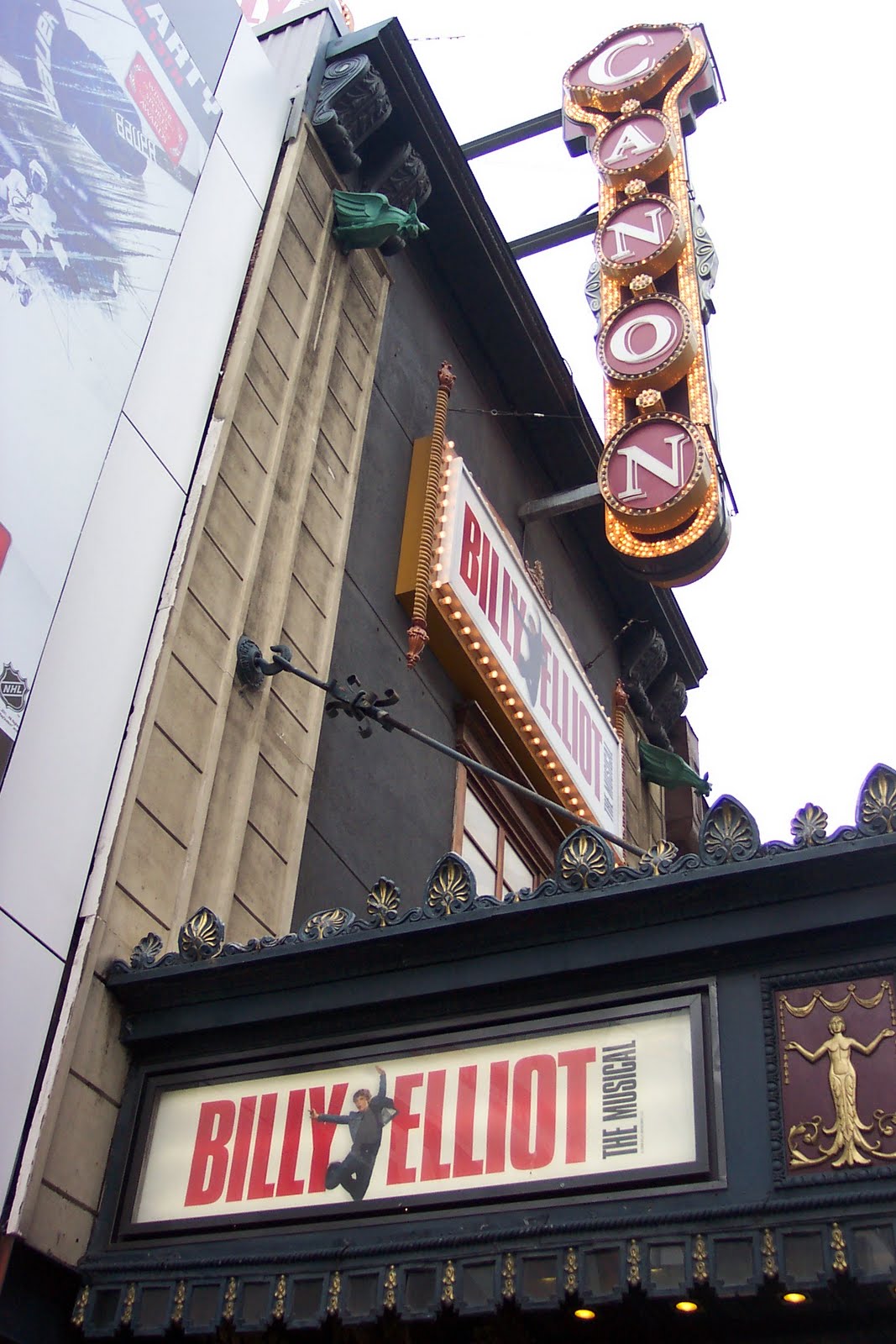
Gotta See Billy Elliot
After a short respite at home, we drove to Toronto, yes DROVE! No more airplanes, buses, taxis, ferry boats, tuk-tuks or trains...at least for now! We arrived in downtown Toronto to find a fun and fun-loving place, one of our favorite cities in North America. We were happy to enjoy great meals and the Toronto production of the musical, Billy Elliot!

The next morning, we drove to our first interview, with Wayne Cadwallader, a well-respected investment manager, a managing partner with Elkhorn Partners. We were not disappointed. Wayne obviously understands numbers in a way that exceeds the ability of most managers, especially those in the finance industry. He takes a long view, looks for funny numbers, and looks beyond the numbers to seek deeper management skills when he analyzes a company. He unfortunately finds many management teams lacking in what he considers to be essential management skills such as conducting a productive meeting, writing an understandable memo, getting to root causes of problems, and managing a project. His insight about management behavior was refreshing. He believes that so many of our financial problems come from managers focusing on short-term, quantitative results, with no consideration of long-term consequences. This may be because he also believes that most professional managers operate out of fear and many second-generation family business managers are not adequately invested in the ongoing success of their companies.

From there, we traveled to Waterloo to visit Paul Born, the founder and President of the Tamarack Institute for Community Engagement. In their own words:

Tamarack exists to build vibrant and engaged communities in Canada. Our work will result in more collaborative approaches and less poverty.
A vibrant community is one where committed citizens work together to build a community that is caring, prosperous and sustainable.
Our mission is to engage citizens in inspired action as they work and learn together on behalf of their communities to create and realize bold visions for the future.

We have long been admirers of Paul Born's work, particularly in the area of poverty reduction. It was a joy to spend a few hours with him soaking up his experience and wisdom about what it takes to bring people together from all walks of life and all sectors of the community in order to gain an understanding of the community's issues and assets, to engage them in collective action to bring about positive social change, and to keep them engaged over the long haul about making their communities vibrant and healthy. We look forward to sharing more of what Paul and his work is all about as we bring together lessons learned from Dave's sabbatical.

After a stimulating time with Paul, we visited Joe Mancini, the founder, along with his wife, Stephanie, of a Kitchener nonprofit called The Working Center. What Joe and Stephanie have accomplished together, along with the residents of Kitchener, over the the last 30 years is truly remarkable. It is truly a manifestation of self-organization, as well as a "build it and they will come approach." The Center started out, and continues to be named a "working center," a place where people can find and create meaningful work that serves the community. It is clear that the spirit of the Mancini's has taken it far beyond that. It is a community center made up of hundreds of people that is focused on helping people find or create work that they care about. Enterprises that have been born out of the Center include St. John's Kitchen, Worth a Second Look resale, the Recycle Cycles community bike shop, the Waterloo School for Community Development, Access to Technology, and Affordable Supportive Housing, among many other initiatives.

Queen Street Commons
One enterprise, the Queen Street Commons Cafe, illustrates the mission, passion and creativity which with the Working Center operates. The café, located at 43 Queen St. South, is strongly supported by volunteers and offers a vegetarian menu, community meeting space, music nights, and a unique gift shop. Food for the café is prepared at Maurita's Kitchen, another Working Center enterprise, at 66 Queen. The café & kitchen are Urban Agriculture projects which aim to reconnect city folks with the local food system.


As we left Canada, we began to think about the last stop on the Schwinn's 25th Anniversary World Tour, and the very last interview for Dave's 2011 sabbatical. Although we've gotten twice as many interviews as expected, we have yet to talk with a representative of the healthcare industry. That final interview will take place at the end of August with a dear friend and colleague, Dr. Tom Inui, who is, among other roles, the Sam Regenstrief Professor of Health Services Research at Indiana University in Indianapolis. Stay tuned...

WONDERFUL WONDERFUL COPENHAGEN

Loved the Wharf
...And the Mermaid!
We were immediately struck by Copenhagen's easy, welcoming atmosphere. Everyone spoke English, including the taxi drivers, who, no matter what you told them, they always knew where they were going. All had GPS, all took credit cards, all gave receipts without asking. The hotel was another pleasant surprise, the most luxurious, restful, best value place we stayed in Europe. When we got in late and asked about a place for dinner, the front desk people pointed across the street to a tiny restaurant, where they said we could get a carry-out. We arrived at the restaurant to find an amazing staff willing to accomodate our needs, a delightful ambiance, and perhaps the best pizza and chicken caesar salad we've ever tasted. It came to be our default restaurant in Copenhagen. This is not to say that we weren't blown away by the eateries at the wharf! We behaved most like tourists in Copenhagen, even taking a "hop on, hop off" bus tour, when we got caught in a rain storm! We loved seeing the Little Mermaid and other sights around the city.

Denmark's MindLab

Our Copenhagen interview was with Kit Lykketoft of Denmark's MindLab, which is a collaboration of three government ministries, Economic and Business Affairs, Taxation, and Employment. Their mission is "to involve citizens and businesses in developing public solutions." What their mission statement forgot to say is that they are all about research and innovation. The lab looks more like a combination of Silicon Valley, a space ship, and an artist's loft. Their solutions, perhaps because of the lengths they go to involve as many stakeholders as possible, seem to be remarkably unique and innovation. Their challenges, as you might expect, include engaging typically bureaucratic government employees and citizens, who find it hard to believe that the government cares about what they think.

It seems appropriate that our departure to home be from Copenhagen, a city that prides itself and is a most international city. We're sure that we would visit again in a heartbeat!

DREAMS OF NORWAY


Approaching Utne via Ferry Boat

Is it any wonder that Carole loves what she loves - mountains, glaciers, rivers and streams, trees and ferns, and stunning landscapes of green, green, green! Actually, the color green must have been invented in Norway from lime to emerald to forest to chartreuse! Whatever we might say about Norway, we both agree that it is the most beautiful place we've ever been, and we've been around the block a time or two! Carole says that if you're very, very, very good, when you die you go to Norway!! It is truly a heaven on earth!

Our trip began with an overnight in Oslo, and an early morning train from there to Voss, a mountain ski resort town where we would spend a few days over our week in Norway. The train ride is said to be among the most spectacular in the world, and it would surely get our vote. Even though it was raining most of the time on the trip, it was still gloriously beautiful, from the fjords to the glaciers, to the small mountain villages and farms along the way.

Researching Family History in Agatunet
In Voss, we rented a car and drove to Kvandall, then boarded a ferry boat to Utne, at the tip of the fjord of Carole's family origins. From Utne, our first stop was the Agatunet (Aga village), where Carole's great-great grandfather, Per, was from. What an experience to actually find reference to her family in the historical records! Then we set out for one of the homes of Arnhild Bleie, that we had rented for our brief stay in the Bleietunet. Bleie (changed to Bly, Carole's maiden name, when her family came to America) was the name that Per took when he married Guri Bleie and moved there.


Ullensvang Church

Before we did anything else (except for catching dinner at the Cinderella Restaurant (believe it or not), we drove around the fjord to visit the Ullensvang Church, which was attended by Carole's ancestors (by walking across the fjord in the winter and by boat in the summer). Needless to say, it was awe-inspiring to be in that place. The following morning, we attended church services there and were pleasantly surprised to see three Norwegian infants baptised during the service.

 Once we returned to our rental house, we were joyously greeted by Carole's cousin, Einar, who escorted us to his house to meet his wife, Sara, who is also Carole's cousin. Sara served us a most amazing dinner of reindeer (a result of Einar's hunting expertise) and fresh vegetables, followed by an incredible dessert and coffee. We have never in our lives felt more welcomed anywhere! The following day, Einar and Sara took us on an amazing sight-seeing tour, a perfectly delightful day spent with our new family!

A bit sorry to leave Bleie, we returned to Voss and prepared for a scheduled interview with Koldjorn Valestrant and Signe Aarhus, the founders and co-owners of Oleana, Norway's premier maker of very high-end, exquisite knitwear (Michelle Obama purchased four Oleana jackets when the Obama's were in Oslo on the occasion of President Obama's Nobel Peace Prize). Two more gracious hosts you will never meet, and the story of their enterprise is truly inspiring. If there was only one organization interviewed for David's sabbatical that could serve as a model of what is possible with vision, courage, talent and fortitude, Oleana would be it!


Oleana's Retail Store in Bergen
The story of Oleana is impossible to tell in this short space, but it is well worth ten minutes of anyone's time to go to http://www.youtube.com/watch?v=uuog-XZKvnM&feature=related, and check out a video that begins to capture the beauty of their work and tells their remarkable story. At Oleana, they say, "The future belongs to the storytellers."


Now that we are home again, we must also say how very saddened we are to know about the recent extreme violence in Norway, a country so deserving of its reputation as a peaceful nation of fiercely independent people who are proud of their history, their culture, and the beauty of their land. Our hearts go out to all who are suffering there, and, even though it is impossible to return to a prior state, we are keeping the faith that Norway will recover from its tragedy and again be a symbol of beauty and peace for the world.

RESPITE IN PARIS

We took the Eurostar train under the English Channel to get from London to Paris, but somewhere along the way Carole picked up a sinus infection - erghh! Fortunately, we had drugs with us, and she picked the best time to get sick, as we had not yet made formal arrangements for interviews in Paris.

The Louvre


Still we had a great time exploring a bit of this wondrous city, from the Eiffel Tower to the Louvre. Actually, we visited the Louvre twice, first via the Metro and found ourselves in a delightful underground complex of shops and restaurants. But when we looked for the Mona Lisa, we found that we weren't in the Louvre at all, as it was closed! The second trip was more successful (by taxi) and the experience was far beyond our expectations.

Having mastered the Underground in London, the Paris Metro was a piece of cake. And once again, we fulfilled a lifelong dream of Dave's by visitng Roland Garros, the venue for the just completed French Open. Unfortunately, everything was shut down for cleaning up after the Open, but we did get to wander around the grounds and the museum a bit.

The weather was miserable, as Paris can be, but we didn't let that stop us from walking down the Avenue des Champs-Élysées to the Arc de Triomphe de l'Étoile with our umbrellas in the pouring down rain. When we were pretty much drenched and cold, we stopped in a lovely cafe for French Onion Soup and a glass of wine - pure delight!
Arc de Triomphe de l'Étoile

The respite was good, as the next stop is Norway, Carole's dream trip of a lifetime! We take with us visions of pastry shops, dancing in our heads!

Ahhh - Paris!

Wednesday, August 10, 2011

LET'S GO TO WIMBLEDON!

Guess Who at Centre Court - Wimbledon
Going to Europe without stopping in London seemed like a sacrilege! But being in London without going to Wimbledon seemed like an even greater travesty. So off we went, by tram, taxi and bus to visit the place of Dave's dreams, center court at Wimbledon! Besides Wimbledon, we visited Trafalgar Square (one big party), Buckingham Palace, the Houses of Parliament, Kensington Palace (new home of William and Kate), and St. Bartholomew's Church, founded in 1123. We mastered the Underground, and got plenty of exercise just wandering the streets of London! Unfortunately, we missed visiting the British Museum, located right around the corner from our hotel, even though we passed by every day to go Starbuck's to get internet access.

Buckingham Palace
Prior to traveling to Europe, we reconnected with an old friend, Neville Hodgkinson, who we met at a leadership and peace retreat in India, sponsored by the Brahma Kumari World Spiritual University, in 1994. At that time, Neville was science reporter for the UK Sunday Times. More recently, however, he has devoted his life to the Brahma Kumari's (BK's) and lives full-time at the organization's retreat center in Oxford.

Carole and Neville at BK Oxford Retreat Centre
In our attempt to connect with Neville, he helped us reconnect with Sister Jayanti, the individual responsible for the BK's international operations. This is an extraordinary responsibility, as the organization now functions in some 130 countries around the world. Consistent with everything we know about the BK's, Sister Jayanti invited us to have dinner with her at their London-based Global Co-operation House headquarters, to travel with her to Oxford, to immerse ourselves in a retreat at the center, and to interview both she and Neville. We were reminded that what BK's do is to help people create a higher consciousness, and that they believe the purpose of life is to be happy and to exchange happiness with others. They do it by being quiet.

Sister Jayanti at Work
During our retreat in India we had a day of silence after learning the BK form of meditation. Recently, they have instituted a global initiative called Just-a-Minute, to shift consciousness in our busy, noisy world by introducing regular one-minute pauses and breaks, when individuals can re-connect with their core self, their strengths and their values.

When BK's actually speak, they get things done. For example, the BK's are the largest user of solar energy in India, they operate hospitals and meditation centers, and their University in Mt. Abu, India is an international non–governmental organization (NGO) in general consultative status with the Economic and Social Council of the United Nations and in consultative status with UNICEF. It is also affiliated to the UN Department of Public Information.

UP THE DANUBE TO BUDAPEST

Our train trip and visit to Budapest provided additional insight into the trauma of Eastern Europe. Hungary had first been invaded by the Nazi's and then by the Communists. The citizens of Hungary had to turn themselves into chameleons in an attempt to survive the concentration camps, general brutality and murder. This sense of history was gained by visiting the House of Terror, a museum housed in the building that served as the center for atrocities reined down upon the Hungarians by both of their invaders.

St. Stephen's Cathedral
That history is in contrast to the artistic and architectural beauty of this vibrant European City. Visits to St. Stephen's Cathedral, the Parliament, the Opera House, the Danube riverfront, and other sights gave us an appreciation for its reputation as one of the most beautiful cities on the Continent. We enjoyed shopping in the Central Market for "real" Hungarian paprika, but passed up the food for several dinners at La Pampa, an Argentinian steakhouse! Our culinary adventures are a bit limited!

Our interviewee Imre Lovey's view, however, goes well beyond Hungary. He is a very well regarded organization and management development consultant around the world, but especially in Europe. He sees most organizations as being diseased with sicknesses such as customer exploitation, aggressive approaches to the environment, alienation, short-sightedness and workaholism. While having very specific knowledge about how to heal those diseases, Lovey advocates going beyond healthy to becoming a joyful organization. He speaks of seeking harmony among customer satisfaction, employees who feel as though they belong, and the minimization of entropy. Some management writers speak of balance, but it seems that Lovey's concept of harmony goes beyond that. He is a gracious host and thoughtful leader.
Imre Lovey's Beautiful Garden Offices

ON TO SERBIA

Touring Belgrade with our Guide, Vesna
Because we were arriving very late at night, and Belgrade is known for the corruption of its taxi services, the people at our hotel told us to call and they would help us hire an honest taxi driver. Unfortunately, by the time our plane got it, the airport was essentially closed, our cell phone didn't work, and the police officer on duty said he couldn't help us. After much frustrating attempts at conversation with many taxi drivers, one of them simply grabbed our bags and said, "Follow me!" He took us through dark streets and back alleyways, around dark, dirty and old buildings until we got into the center city, which looked in the dark of night like everything else we had seen. Until we arrived at the Zira Hotel, we were generally a little fearful of what might happen. Luckily the Zira is brand new, bright, shiny, and nearly as luxurious as the Trident in Mumbai, with a new Western-style shopping mall right next door. It seemed to be an oasis in the desert of Belgrade (a tribute to our travel agent, Carole)!

Visiting Eredevik, Village of Dave's Reger Family
The next morning, our guide, Vesna and our driver, Chava, picked us up at our hotel and took us on a tour of the city. It didn't look nearly so scary in the daytime, and we had probably been influenced the night before by Belgrade's Eastern European reputation. We had arranged for Vesna and Chava, because our primary purpose in going to Serbia was to track down Dave's family roots on the Reger side. Helping families find remnants of their histories is the work that Vesna does. Like Cambodia, we learned about the trauma associated with seemingly constant distrust, conflict and war in that part of the world.

While we had been unsuccessful at securing an interview for Dave's sabbatical in Serbia before arriving, Vesna had arranged for Chava's wife to meet us for dinner at a traditional Serbian restaurant. There we learned more about the company that Chava and Dubravka own. Their company provides shipping and transportation, primarily in Serbia.

Interviewing Dubravka on the Danube
At dinner, we also found that Dubravka had just finished her Master's thesis on a fascinating initiative aimed toward bringing about economic and other cooperation among the countries of the Danube.  This initiative, referred to as a Strategy for the Danube Region, was started in June 2009 by the European Union (EU) Commission. The Danube region includes, from the EU’s perspective, the entire river’s basin: Germany (Baden-Württemberg and Bavaria), Austria, the Slovak Republic, the Czech Republic, Hungary, Slovenia, Croatia, Serbia, Bosnia and Herzegovina, Montenegro, Romania, Bulgaria, the Republic of Moldova and Ukraine ( but only the Ukrainian regions that have tributaries of the Danube). The main objective of the strategy is to create a sustainable long-term development and cooperation framework in the region.

EUROPEAN TOUR BEGINS IN GERMANY

After another month at home, backing up video, reviewing notes, making new travel and interview arrangements for Europe, and going over video equipment one more time, we set sail (actually flew) to Munich.

We arrived at our hotel late in the evening, and asked for a nearby restaurant location. We walked the several blocks to the restaurant, and found ourselves at a traditional German beer garden, the Augustiner. Dave was overwhelmed with memories of his childhood, with outdoor accordion bands, dancing, singing and just great fun in Dayton, Ohio. The beer and soft pretzels weren't bad either!
The Inevitable Yarn Shop Visit

After that amazing immersion into Dave's youth, we left Munich to get a broader perspective of Germany. Via Germany's splendid rail, we journeyed to Pffaffenhofen to visit a yarn shop (of course), followed by a sobering visit to Dachau. The following day, we again boarded a train to visit Mittenwald, which some is the most representative and beautiful Bavarian village. We were delighted to visit the famous Mittenwald violin museum, and to discover that there was a very prominent violin maker family with the last name nearly the same as Dave's mother's family name, Reger.

Dachau Remembered

The Elusive Software Cluster FOUND!

From Munich, we traveled to Darmstadt, primarily to check out Dave's family roots on the Schwinn side, and to track down the hard-to-find Gino Brunetti, head of the coordinating body of Germany's famed software cluster. We were determined that while in Germany, we would learn more about clusters as a form of enterprise that is gaining more interest in the United States as a way to promote and grow regional entrepreneurship and innovation. After a visit to the Technical University of Darmstadt, we traveled around and around the city looking for the cluster's offices, only to find that they were directly across the street from the hotel  that held our original booking. We were moved into the center city due to an overbooking, only to return to the original neighborhood for our interview in Germany. 

 The software cluster was established as the result of government-sponsored competition, in which the entrants needed to provide evidence of potential success based on a specialized skillset, comprehensive plans, and committed partners. Gino was happy to tell us that he wants to set up another Silicon Valley in Germany. He shared with us the challenges, opportunities and occasional amazing synergies of having people who naturally perceive each other as fierce competitors in a room together.

A FEW DAYS IN CAMBODIA

Cambodia's National Museum
Arriving in Phnom Penh, we were immediately struck by not only the heat and humidity, but the overall modernity of the city. That is little wonder, as the city was completely evacuated by the Khmer Rouge regime in 1975, in a quest to create a utopian, rural peasant society. The city was only repopulated after the fall of the Khmer Rouge, and much of the city has been rebuilt. The city is also characterized by dozens of temples and parks, dedicated to the largely Buddhist culture.

Our hotel was charming and amazingly full of people who spoke English. In fact, the whole area where we were located was full of English-speaking people. Only later did we learn that the area was an ex-patriate enclave, populated by people from all over the world who either run or work in the hundreds of NGO's, primarily funded by foreign donors, who have been the primary souce of redevelopment since the fall of the Khmer Rouge.

Since we arrived on a holiday weekend (the Cambodian New Year), and the majority of people were out of the city on holiday, we had no appreciation for the regular amount of traffic and congestion. It also gave us a short period to relax after the intensity of the Indian interview schedule, and to enjoy the fascinating waterfront and its many shops and restaurants. Transportation by tuk-tuk was a complete, breezy joy!
A Family's Ride in a Tuk-Tuk

Once we connected with Graeme Storer, a long-time friend and colleague from work done with CARE:USA in Thailand, he took us under his wing, hosting meals, brief tours of the area, and even tourist shopping for Carole. He and his colleagues at VBNK, a prominent Phnom Penh-based NGO  helped us to understand the traumatic history of Cambodia. We appreciated their particular insight into the value of and problems with all the many NGO's, all trying to help improve the life of Cambodian citizens.

Graeme Storer at VBNK Offices
One way to characterize the work of NGO's in Cambodia is that most are giving the people fish (i.e., services and relief based on donors' perspectives). In contrast, VBNK is teaching the people to fish. The focus of their work is on leadership development for both the government and other NGO's, with a particular emphasis on self-awareness and personal development as a pathway to more effective functioning in the society. This is a particularly challenging task, as it represents significant and counter-cultural change. VBNK's training and coaching occurs in a context in which change, no matter who brings it and for whose purpose, is nearly always painful, difficult and deadly.

In speaking about the work of VBNK, Graeme noted that, "In a post-traumatic society like Cambodia, people are quite tied to the past, even if they're not talking about it." Further, "Leaders are not always thoughtful enough about the worldview they hold, the values that they hold, and how they express them...perhaps not even aware that there is a dissonance between the values that are espoused in development-speak, like 'participation, equality,' and living in a hierarchical society."

Sunday, April 17, 2011

Indescribable Mumbai

The Trident Bandra Kurla Lobby
Arriving in Mumbai from Johannesburg, we were blessed to find that our hotel, the Trident in Bandra Kurla, was a beautiful, cool, quiet and (unbelievably) very affordable place, with impeccable service. And, thank heavens our hotel was the peaceful respite it was, as we allowed little time for rest among interviews in Mumbai.


Pooja's Team with Pooja on the Left in the Middle
Beginning with our first interview with Pooja Warier, Director and co-founder (with Richard Alderson of the UK) of UnLtd India (www.unltdindia.org), a seed fund and incubator for social entrepreneurs, we were pretty much on the run every day. Pooja was a delightful start to our visit, making us feel welcome the moment we arrived at the Bombay Hub, where the organization provides co-space and services to its members. The organization's distinction is working with early-stage social entrepreneurs, offering them a "complete ecosystem of seed funding, incubation support and co-working space with which to launch their ventures."

During our visit to the Hub, we met Karen Peters (who is actually from Wisconsin, continuing to live in Mumbai with her Mom after her Dad's working time in the city), who with Adrienne Thadani founded a nonprofit called 'Fresh and Local' at the Hub. The organization aims to "design, plant and maintain fruit and vegetable gardens in the urban setting of Mumbai to address problems of lack of access to organic, nutritious, fresh and locally grown food." Their intention is to work with local people to create fifteen hundred gardens of a size that would benefit thirty people each.We also had the opportunity to spend a delightful evening with Pooja at Juhu Beach during our stay in Mumbai, discovering many intersections and connections in our lives. Our children will not be surprised to know that Pooja is our most recent "adoptee."

As the days went by, we began to more deeply understand the need for social entrepreneurship and an agressive civil and social sector in Mumbai (some say that the Indian government lacks the "will" to intervene in the seemingly insurmountable social problems). The city is gigantic - more than 19 million people by some estimates - and the great majority live below the poverty level of less than $1.00/day income. Mumbai is a magnet to Indians from rural areas seeking a better life, but many who arrive dreaming of Bollywood end up in prostitution or organised crime. The city's population has doubled in 25 years, with half living in slums. In some parts, 50,000 people are said to be crammed into each square kilometre.

This scale of poverty is nearly impossible to imagine, but impossible to ignore on most any street, where families live beneath tarps on the sidewalk, and young girls with babies knock on our taxi windows asking for money at intersection after intersection. More about our visit to Dharavi (locale of 'Slumdog Millionaire' filming) later in the blog.

Creative Handicrafts New Building
(http://www.creativehandicrafts.com/)
Helping us greatly to begin to understand how NGO's are playing a role in alieviating poverty was our visit with Mr. Johny Joseph at Creative Handicrafts. Creative Handicrafts was founded 25 years ago by Spanish Missionary, Isabel Martin, in response to research findings that women in the Mumbai slums, whose husbands were abusive, alcoholics or absent, were unable to care for themselves or their children without any means of earning a livelihood. The organization set out to train women in sewing and handicrafts that could be sold for a profit. Eventually, services were added to include primary education, health assistance, savings and micro-credit, and adult education.

Today, Creative Handicrafts coordinates the production of 12 textile cooperatives spread in different slums, each one producing garments, complements, soft toys, and other handicrafts that are aimed at both local and international markets. The international market is managed through the NGOs involved in fair trade projects, the local one through exhibitions, sales at schools, universities, institutions, stalls and their own store. Johny notes how important it has been to the organization over the past several years to design and create products that sell based on their global level quality, rather than on their charitable development "story." In addition, a food catering and delivery project, Asli Foods, was born as an employment alternative to those women that, for several reasons, cannot get involved in sewing activities.

Women in Training at Creative Handicrafts

Although the organization's headquarters has moved in recent months into a large building donated by the Spanish government, Johny was kind enough to take us to their prior offices and workshops in a nearby slum. We were able to interact with kids at the creche, the women of 2 cooperatives, and women preparing food for the catering business. We learned a great deal from our interview, especially about the ways out of poverty by helping women in the slums and rural areas to become productive and able to educate their children.

The most striking thing about Mumbai, of course, is the extraordinarily stark contrast between the slums and the fast-paced, cosmopolitan, urban economic powerhouse that Mumbai is determined to become.  We were most fortunate to be able to glimpse the private industry and government sides of the equation, due to the generous introductions made for us by Professor Prasad Kaipa, an Indian professor and executive coach to many Mumbai leaders, who our friend Mark Nepo suggested that we contact. The result was three fascinating interviews including Mr. Ravi Kant, Vice Chairman of Tata Motors; Mr. Prakash Apte, President/Managing Director of Syngenta India, Ltd.; and Rear Admiral (Retd.) Chary, Director (Shipbuilding) of Mazagon Dock Limited.


Nano - the People's Car
We traveled to Bombay House, the headquarters of Tata Motors (http://www.tatamotors.com/), passed through very tight security, and were led to the outer offices of Mr. Ravi Kant, the company's very highly respected Vice Chairman. Founded by Ratan Tata, one of India's most successful businessmen with multiple enterprises around the country, Tata Motors is perhaps best known for having recently purchased Jaguar and Land Rover from Ford Motor Company, and its introduction in 2010 of the world's first $2500 car, the Nano, known as "the people's car."


It would be hard to imagine a more wise, warm, gentle, generous and forthcoming an industrial leader than Ravi Kant. Having scheduled a 15 minute appointment, we were able to spend nearly an hour learning about his decade long tenure at the helm of the company, during which time its remarkable growth and transformation has occurred. At the end of our visit, he asked us to wait outside the office for a few minutes, disappeared for a bit, and then invited us back into his office, presenting us with a bag full of goodies - company literature, a recently published book about the Nano's painful and exhilerating introduction into the marketplace, and a lovely wristwatch for each of us (made by Titan Industries, a Tata company).


We're looking forward to opportunities that may arise to share the results of Dave's sabbatical research with Mr. Kant, as he is becoming deeply involved in his "retirement" role as Chairperson of the Board of Governors for the new Indian Institute for Management/Rohtak, a graduate school intended to "produce world-class managers and leaders through its philosophy of exposing students to real life unstructured situations apart from imbibing them with knowledge of the analytical tools and business philosophies required to be a success in the current, and foreseeable, economic scenario."


If Ravi Kant was pure charm, Prakash Apte, President/Managing Director of Syngenta India, Ltd. was pure delight. With a self-deprecating style, an infectious laugh, and an amazing story of leading his company's transformation, our interview with Prakash was surely a highlight of our Mumbai experience. We were so fortunate that he agreed to our interview, and then drove 2 hours from the city of Pune to Mumbai (on his day off!) to meet with us as our hotel.


It is hard to overestimate the importance of a company like Syngenta (http://www.syngenta.com/) to India's survival. The company's purpose, "bringing plant life to potential," indicates its commitment to helping farmers increase their production, while preserving the environment, and ensuring healthy food supplies for all. In other words, their work as a huge agribusiness is sustainable agriculture through two main types of products: seeds and crop protection.


We will look forward to sharing the story of Syngenta's recent change initiative, which was based on a marriage of two things: wise business strategy and the Indian spiritual concept of sankalpa; san meaning "altogether," and kalpa meaning "idea." While having much deeper meaning than can be stated here, the idea of sankalpa in this context means taking an individual and collective oath of intention or will toward a specific outcome. While strategy is rational, sankalpa is pure intuition.


The final Mumbai interview, with Rear Admiral (Retd.) Chary, Director (Shipbuilding) of Mazagon Dock Limited (MDL), was a fascinating look into the supplier/builder of warships, stealth frigates and submarines for the Indian Navy and others. Mazadon also builds offshore platforms and associated support vessels for offshore oil drilling. It also builds tankers, cargo bulk carriers and passenger ships and ferries. The shipyards of MDL were established in the 18th century. Ownership of the yards passed through various entities, including the British India Steam Navigation Company. Eventually, Mazagon Dock Limited was registered as a public compan in 1934. The shipyard was nationalized in 1960, and is now a function of the Government of India.

Admiral Chary (also having taken time away from a national holiday to visit with us at our hotel) shared with us his perspective on the differences between his lifelong career as a Naval officer, and the challenges of managing the enormous complexities of a huge government organization, employing thousands of unskilled (but now cross-trained) employees doing extremely difficult and demanding physical work, along with highly skilled workers doing very technical and precise work.

Ghandi's Bedroom
By the end of these interviews we were a tired pair, and knowing that we would be unlikely to visit Mumbai again, we went looking for a brief "tourist" experience. Little did we know how much territory we could cover with our wonderful driver from the Trident. Beginning with a visit to Ghandi's home, we ventured onto a brief shopping expedition, and then on to the primary sites of Mumbai's November 2008 terrorist attack. During the attack, witnessed worldwide on television, 120 people, some from the US, Australia and Europe, but primarily ordinary Indians, were killed and many hundreds wounded. One of the first targets was the historic Leopold's Cafe, a favorite hang-out of foreigners, where we had lunch during our tour. Then we went on to the famous Taj Mahal Palace hotel, where hundreds of people were held hostage and many died (the other hotel attacked was the other Trident hotel at Naimon Point).
Leopold's Cafe
Finally, and completely impossible to describe, was a brief visit to the gigantic Dharavi slum (the site of the filming of the movie, 'Slumdog Millionaire'). We had actually passed up a longer Dharavi visit and interview with the founders of Reality Tours, due to pure exhaustion, but we did get a bit of a walk-through down one street with our driver. Our immediate and surprising impression (besides the oppressive heat) was an alive hub of entrepreneurial activity taking place in the most unlikely and harsh environment imaginable. In every shop we saw, there was an enterprise at work recycling scrap - from large, household applicances to all sorts of other metals and plastics. Untold numbers of people just trying to eke out their survival from the rest of the city's discarded trash. And a few goats.